2026-10-10 ·
How Hailstorms and High Winds Damage Roofs in Denton
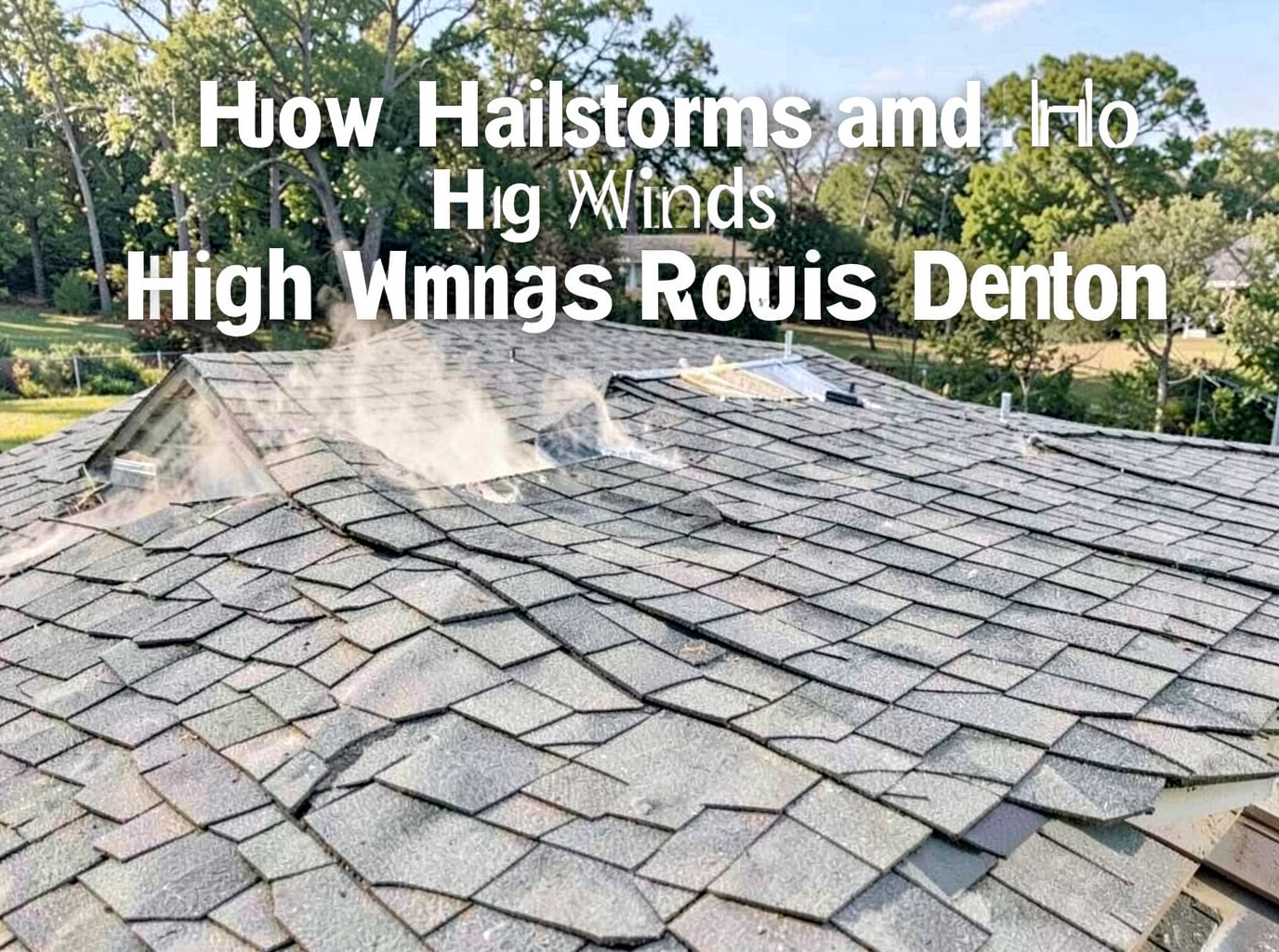
Hailstones reaching 1–2 inches and wind gusts over 60 mph during Denton spring thunderstorms dent, crack, and lift roofing materials on homes throughout Denton County. These forces hit hardest on south- and west-facing slopes in neighborhoods such as Southridge and Northwood, where exposure to open fields increases impact velocity. Older asphalt shingles common on 1970s–1990s houses near the Denton Courthouse-on-the-Square lose granules quickly, exposing felt underlayment within a single season of repeated strikes.
Hail Damage Mechanisms on Local Roofing Materials
Hail strikes dent metal panels and fracture asphalt shingles by concentrating force on small surface areas. In Denton’s hot summers that follow spring storms, temperature swings expand these micro-cracks, allowing water intrusion during later rains. Homes in the Oak Street Historic District often carry original or aged shingles that lack modern impact resistance, so even moderate hail produces widespread granule loss and edge curling. Metal roofs near the University of North Texas show circular dents that collect debris and accelerate corrosion at the coating level. Wind-driven hail adds horizontal force, damaging vertical surfaces like gable ends and ridge caps that standard vertical hail rarely reaches.
High Wind Uplift and Structural Effects in Denton County
High winds create negative pressure that pulls shingles upward along eaves and ridges, especially on homes with limited attic ventilation in Southridge. Once the seal breaks, wind catches the lifted edge and tears sections free during sustained gusts common in Denton thunderstorms. Gable roofs on older properties near the Denton County Courthouse suffer more uplift because their steeper pitch catches wind differently than low-slope designs. Fasteners pull through decking when rafters lack proper bracing, a frequent condition in houses built before modern code updates. Debris from nearby trees in Northwood neighborhoods becomes projectiles that puncture underlayment once shingles are displaced.
Seasonal Storm Patterns Affecting Denton Roofs
Denton experiences peak hail and wind activity from March through May when warm Gulf moisture collides with cooler fronts. These events deliver hail mixed with 50–70 mph winds that test roof integrity before summer heat expands any existing damage. Mild winters allow small cracks to persist without freeze-thaw cycles, yet spring storms arrive when roofs have not yet been inspected after the previous season. Properties in Lewisville, Corinth, and Sanger share the same weather corridor, so damage clusters appear across city lines after single large events. Homeowners in Rayzor Ranch and Union Park report repeated claims because newer subdivisions still use standard shingles not rated for the region’s documented hail sizes.
Visible Signs After Storms in Denton Neighborhoods
Check for missing granules in gutters, circular soft spots on shingles, and bent flashing around chimneys after any hail event. High winds leave torn ridge vents and lifted corners on Southridge homes where trees provide partial shelter but still funnel gusts. Inspect attic spaces for daylight penetration through decking gaps created by uplift. Metal roofs near Downtown Denton show dent clusters that hold water and stain over time. These indicators appear faster on roofs older than 15 years, which dominate Oak Street Historic District and adjacent blocks.
After identifying damage, schedule a hail damage roof repair assessment or storm damage roof repair evaluation. Review the guide on claiming a roof leak on insurance after a storm for documentation steps specific to Denton County claims.