2026-10-10 ·
Hail Damage vs. Normal Wear: How to Tell the Difference
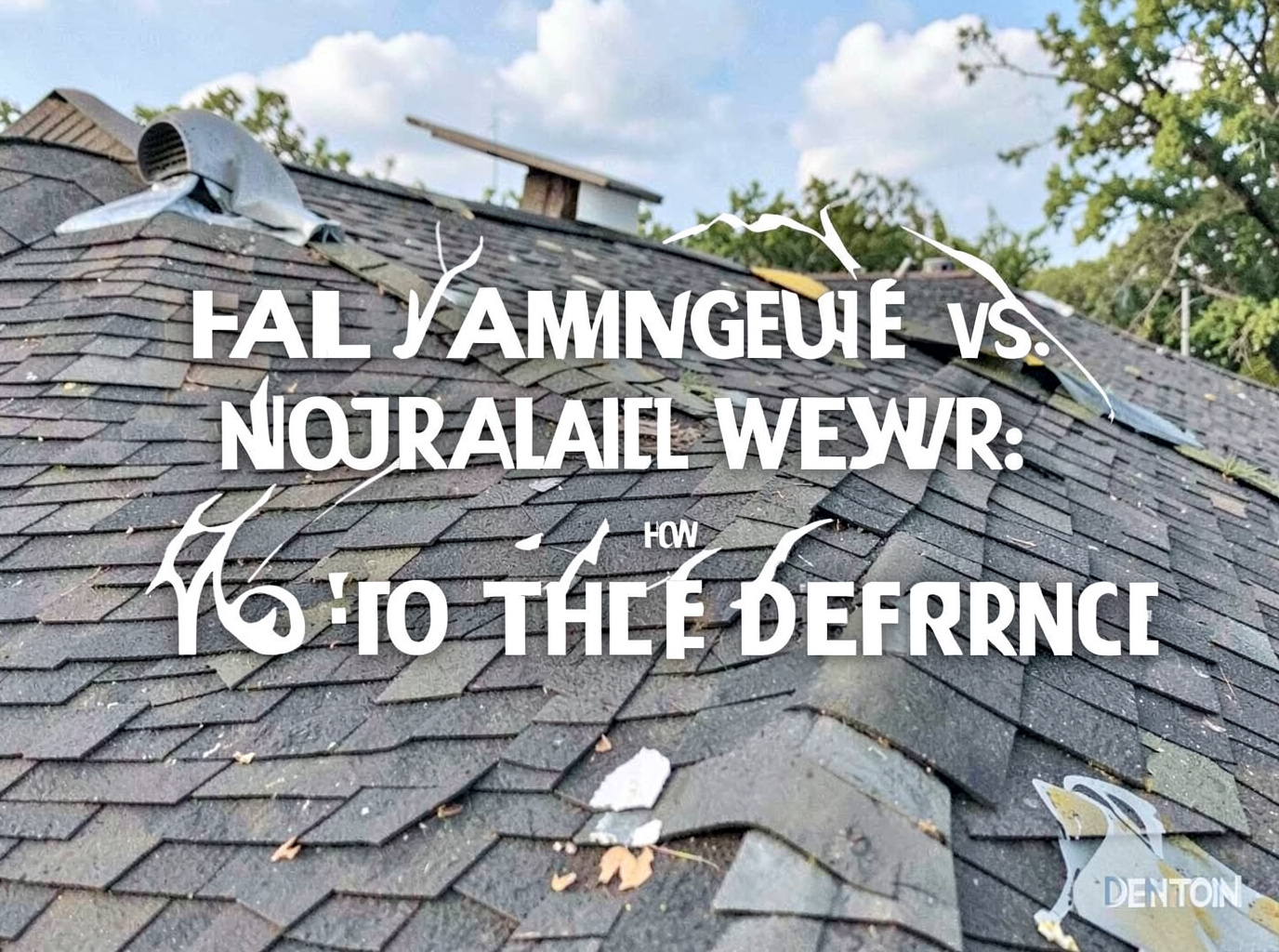
Hail damage shows as random dents or fractures measuring 1/4 to 1 inch across shingles with possible bruising or granule loss in isolated spots, while normal wear produces even granule shedding, curling edges, and cracking across the entire roof surface after 15-20 years of exposure. In Denton, spring thunderstorms often deliver hail that strikes roofs unevenly, leaving patterns that differ sharply from the steady degradation caused by hot summers and mild winters.
Spotting Hail Damage on Denton Roofs
Hail strikes create distinct marks that stand out from everyday aging. Look for circular depressions or cracked granules in random locations rather than across whole slopes. On asphalt shingles common in Southridge and Northwood neighborhoods, fresh hail hits often leave soft spots or missing granules in clusters that match storm paths. Older homes near the Denton Courthouse-on-the-Square may show these signs more clearly because their original shingles have already lost flexibility. Check for bruising on the underside during attic inspections, especially after events that also affect nearby Corinth and Lewisville. These patterns rarely align with roof valleys or edges where wear concentrates.
Recognizing Normal Wear Patterns
Normal wear develops evenly over time from UV exposure, temperature swings, and repeated thermal expansion. In Denton’s hot summers, shingles dry out and lose granules uniformly, leading to bald patches and curled tabs after 15-20 years. Mild winters reduce freeze-thaw cycles but still allow gradual cracking along the same lines on every slope. Homes in the Oak Street Historic District often display this consistent aging because their roofs face the same daily sun angle. Water flow during spring thunderstorms accelerates erosion at seams and fasteners first, creating predictable failure lines rather than scattered dents. Tracking installation dates helps separate this steady process from sudden storm events.
How Local Weather and Housing Stock Affect the Difference
Denton’s spring thunderstorms deliver hail that hits roofs at varying angles, producing the random damage patterns seen more often in newer subdivisions near the University of North Texas. Older housing stock in Downtown Denton and Southridge experiences normal wear faster due to original single-layer shingles that have reached 18-22 years of service. Soil movement from occasional heavy rains can add minor shifting that mimics isolated hail but stays limited to lower courses. Nearby Sanger and Lewisville share the same climate cycle, so roofs there show identical wear timelines. Inspect after each thunderstorm season to catch hail before it combines with existing wear and creates leaks.
Practical Inspection Steps After Storms
Begin with a ground-level scan using binoculars to note any fresh granule piles in gutters or random dark spots on shingles. Climb safely only with proper equipment and examine for soft spots by pressing gently. Compare damage on north versus south slopes, since hail often concentrates on windward sides during Denton storms. Document locations with photos that include roof edges and any nearby landmarks like the Denton County Courthouse for insurance reference. If patterns appear scattered rather than uniform, schedule a professional assessment rather than assuming age-related failure.
For roofs showing mixed signs, review the full surface including flashings around chimneys and vents where wear starts first. This approach prevents mistaking hail for normal aging in areas like Rayzor Ranch or Union Park. When damage clusters appear after a known thunderstorm, consider professional evaluation through Hail Damage Roof Repair or read How Hailstorms and High Winds Damage Roofs in Denton for more local context. Owners in Southridge can also check Can You Claim a Roof Leak on Insurance After a Storm? (Adjuster Tips) when patterns suggest sudden impact rather than gradual wear.